

Rubery has a mix of established homes, extensions, garages, workshops and commercial premises, so renovation work can uncover materials installed many years ago. If a building was constructed or refurbished before asbestos use was tightly controlled, it is sensible to consider asbestos testing before drilling, stripping, replacing ceilings or disturbing old insulation. Planning early gives property owners a clearer route to asbestos removal when a survey identifies a material that cannot safely remain in place.
Asbestos is not dangerous simply because it exists in a building. The risk increases when asbestos-containing materials are damaged, cut, sanded, broken or removed without suitable controls. Fibres can become airborne during apparently ordinary jobs such as fitting a new boiler, chasing cables, removing textured coatings or taking down an old shed roof. A calm, evidence-led assessment helps separate materials that can be managed from those that require specialist attention.
Why testing should come before renovation
A visual inspection alone cannot reliably confirm whether a board, adhesive, lagging, sprayed coating or cement product contains asbestos. Proper asbestos testing involves identifying likely materials, taking samples under controlled conditions and sending them to a competent laboratory. The resulting information can then be matched to the proposed work, rather than relying on assumptions based on colour, age or appearance.
For a Rubery homeowner, testing may be particularly useful before opening up walls, replacing a ceiling, removing old floor tiles or converting an attached garage. Landlords and businesses should also think about access, maintenance schedules and the possibility that different parts of a building were altered at different times. A focused survey can be more useful than treating an entire property as one uniform space, provided the survey scope reflects every area the project may disturb.
Keep any available building records, previous survey reports and details of planned work ready for the surveyor. Explain which rooms, roof spaces, service routes or external structures will be affected. Good preparation reduces the chance of a survey missing a hidden interface between old and new materials, and it helps contractors understand which areas are safe to enter, which must be avoided and which need further investigation.
When asbestos removal may be required
If testing identifies asbestos in a material that will be disturbed, the next decision is whether it can remain under a documented management plan or needs removal. Removal is not automatically the right answer for every discovery. The condition of the material, its location, the likelihood of disturbance and the intended building work all matter. Where removal is necessary, use a competent contractor with the right training, controls, waste arrangements and insurance for the job.
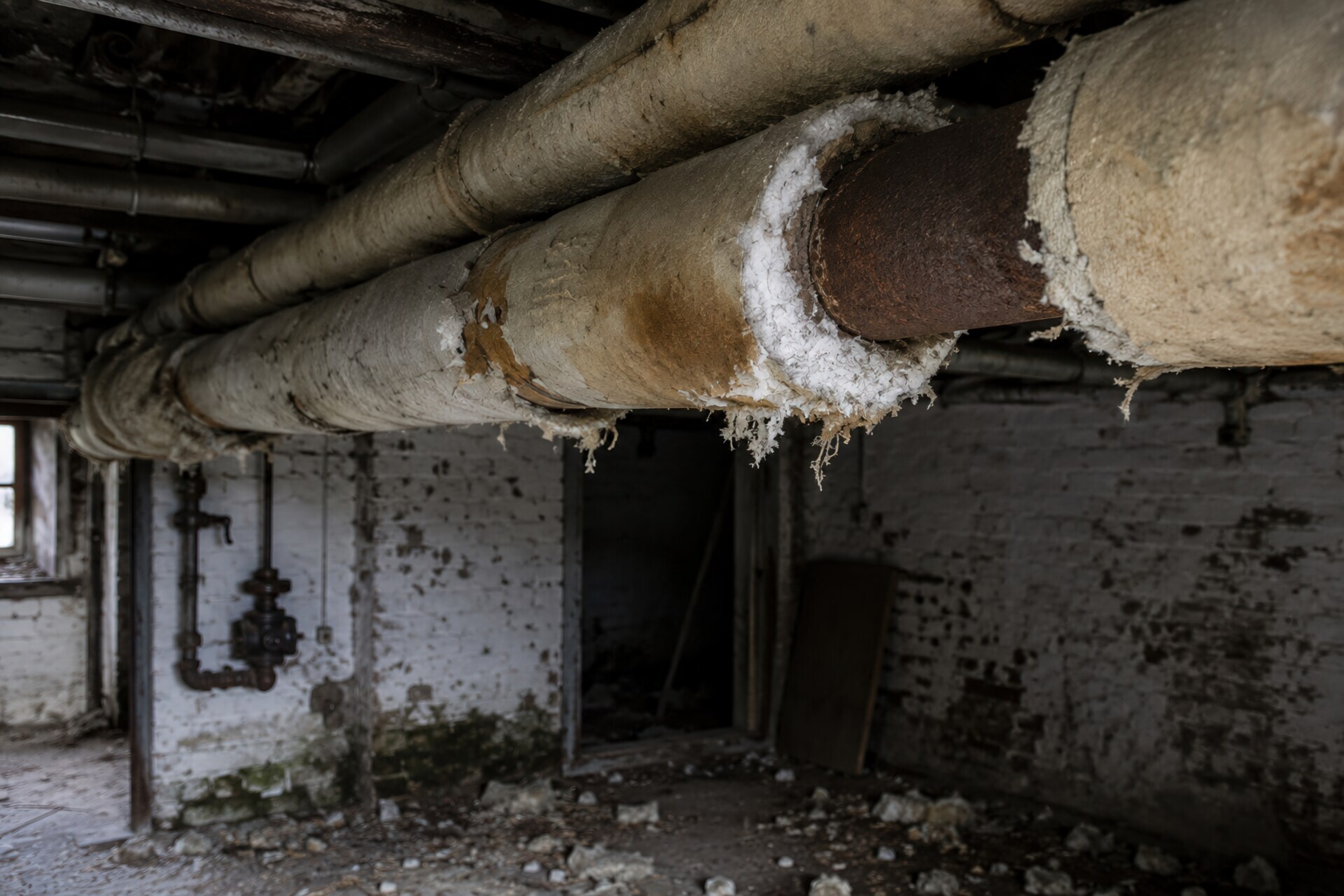
Professional asbestos removal should be planned around enclosure or controlled segregation, suitable personal protective equipment, decontamination, air monitoring where appropriate and secure transport of waste to an authorised facility. The method will depend on the material. A cement sheet, textured coating, insulation board and pipe insulation do not present identical handling requirements, so a generic “strip out” approach is not enough.
Do not sweep debris, use a household vacuum or attempt to bag suspect fragments as ordinary building waste. Stop work, keep people away from the area and seek advice if a material is unexpectedly damaged. Photographs can help explain what happened, but avoid touching or moving the material simply to obtain a better image. Small precautions at this stage can prevent a minor discovery becoming a wider contamination problem.
Coordinating surveys, contractors and occupants
A safe project depends on communication as much as on the survey itself. Give the relevant report or written findings to the main contractor and any tradesperson whose work could affect the identified material. Make sure the project programme allows time for further sampling, removal, clearance testing or a revised method statement. Rushing a job because a skip, scaffold or delivery has already arrived can create pressure to take shortcuts.
In an occupied home, agree which rooms will be unavailable and how dust, access and temporary services will be managed. In a shop, office, school or community building, consider visitors, neighbours, fire routes and the separation of clean and controlled areas. A clear written handover helps everyone understand what has been completed and what must still be protected. For wider planning advice, this guide to safer building projects offers useful questions to raise before work starts.
After removal, retain the survey, waste documentation, air monitoring results and any clearance certificate or equivalent completion record supplied for the work. These documents can support future maintenance decisions and reassure later contractors that the relevant area was dealt with appropriately. They are also valuable when a property is sold, leased or altered again, because the next project can begin with better information.
A sensible next step for Rubery properties
The safest approach is to treat asbestos as a planning issue, not an emergency assumption. Identify the age and history of the property, define the proposed work, arrange appropriate asbestos testing, and use the findings to decide whether materials can be managed or must be removed. If a suspect material is disturbed unexpectedly, stop work and obtain competent advice before anyone continues. This measured process protects occupants, tradespeople and the project itself.
Rubery projects often involve several trades working in sequence, so resolving asbestos questions at the beginning can prevent delays later. A well-scoped survey, clear contractor brief and properly documented asbestos removal plan provide a practical foundation for safer refurbishment, maintenance and improvement work.