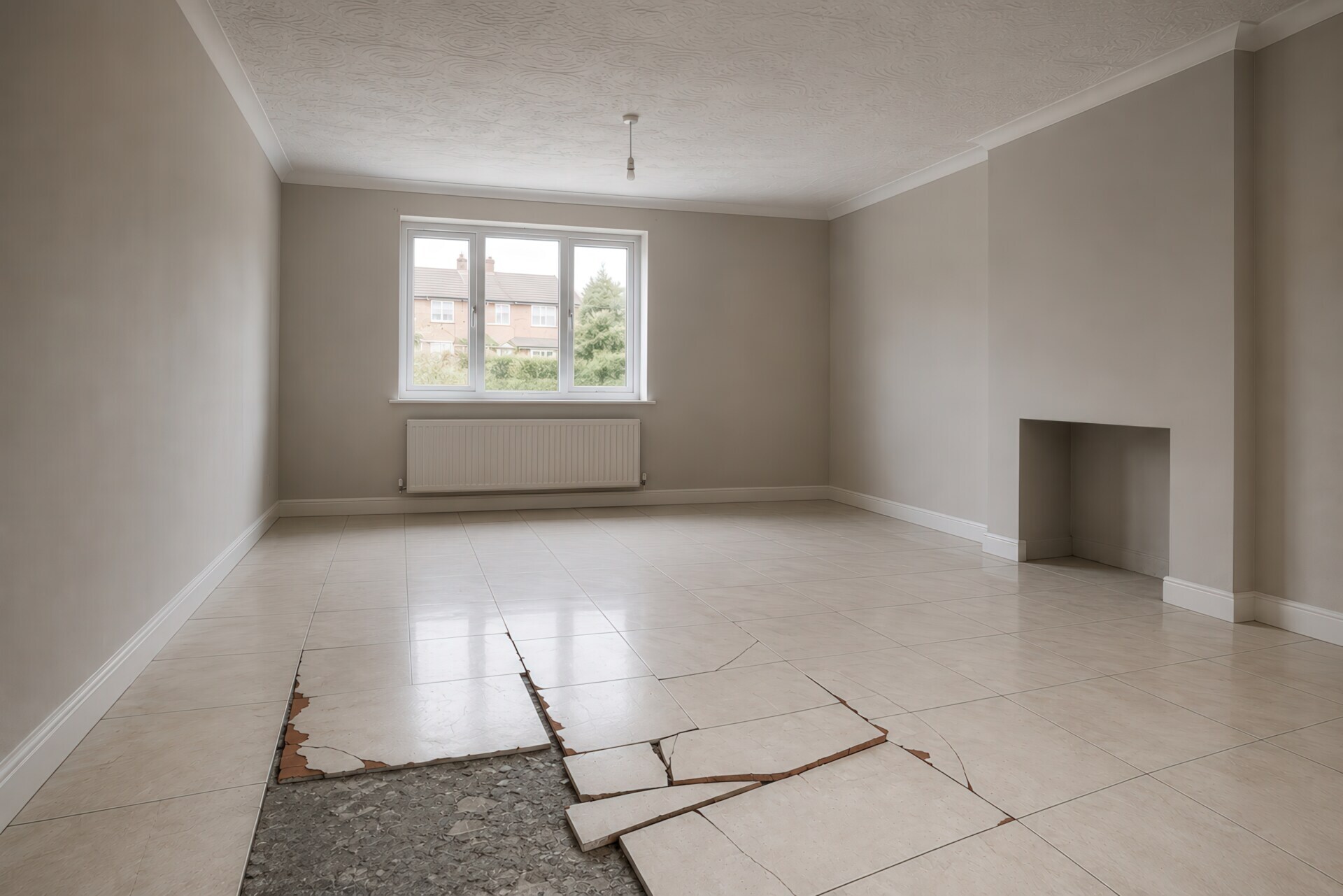
Renovating a property in Tipton can involve more than choosing finishes, arranging trades and setting a realistic programme. Buildings constructed or altered before the year 2000 may contain asbestos in places that are easy to overlook, including textured coatings, insulating boards, old vinyl flooring, roof sheets, soffits, garage panels and service ducts. The material is not necessarily dangerous when it is intact and left alone, but drilling, sanding, cutting or breaking it can release fibres into the air.
A calm, well-ordered approach is therefore valuable. Before walls are opened or old fixtures are removed, property owners should identify what could be present, arrange appropriate asbestos testing where needed, and make sure any required work is planned around the findings. This guide explains how testing and removal fit together for homes, rented properties, shops, offices and small industrial premises in Tipton.
Why asbestos testing should come before renovation
Asbestos cannot be confirmed safely by appearance alone. Similar-looking boards, tiles and textured finishes may contain very different materials, while an apparently ordinary ceiling or partition may have an asbestos-containing backing or coating. Guesswork can lead to two problems: unnecessary disturbance of a hazardous material, or delays when a contractor discovers an unexpected item after work has started.
A suitable survey or targeted assessment helps create a clearer picture of the building. The scope should reflect the proposed work. A refurbishment that involves removing a kitchen ceiling, chasing walls for new wiring or replacing a roof needs more detailed consideration than a decorating project that does not disturb the fabric. Samples should be taken by competent professionals using controlled methods, with laboratory analysis used to confirm whether asbestos is present.
Good information also helps everyone understand the boundaries of the project. The report should identify suspect materials, their condition, locations and the recommendations for managing them. It can then be shared with the principal contractor and relevant trades so that nobody relies on an assumption made during an early quotation visit.
Planning asbestos removal in Tipton
If testing confirms asbestos in an area that must be disturbed, removal should be treated as a specialist work package rather than an informal addition to general building work. The correct method depends on the type of product, its condition, the amount involved, its position and the likelihood of fibre release. Some materials may be suitable for controlled removal; others may be safer to manage in place if the renovation can be redesigned around them.
Before work begins, the contractor should explain the sequence, access controls, protective measures, waste arrangements and clearance process. The work area may need to be isolated from occupants and other trades. Furniture and tools should not be moved through a contaminated zone without a plan, and ordinary household vacuum cleaners or sweeping methods are not suitable for asbestos debris.
Neighbours, tenants and staff should receive practical information about timing and access. For a shop or workplace in Tipton, this may mean arranging work outside trading hours or temporarily closing a room. For a home, it may involve keeping children, pets and visitors away until the area has been formally released for normal use. A written plan reduces confusion and makes it easier to stop the job if unexpected material is uncovered.
What property owners should ask before work starts
Ask who is responsible for the survey, who will interpret the results and who will coordinate the removal. Check that the proposed contractor understands the specific material and is equipped for the task, rather than offering a broad price based only on photographs. You should also ask how the work area will be sealed or controlled, how waste will be packaged and transported, and what evidence will be supplied when the area is ready to hand back.
It is equally important to keep the project paperwork together. Retain survey reports, sample results, quotations, plans, photographs and completion information. If a property is sold, let or refurbished again later, these records can prevent the next owner or contractor from starting without useful background. Our guide to safer renovation planning also highlights why sequencing and communication matter when several trades share the same programme.
Managing asbestos when removal is not required
Removal is not automatically the safest or most proportionate response. If an asbestos-containing material is sound, undisturbed and outside the renovation zone, a management approach may be appropriate. That can include recording its location, labelling or protecting it where suitable, informing future contractors and checking its condition periodically. Any decision should be based on a competent assessment and the intended use of the space.
Design changes can sometimes reduce the need to disturb a material. For example, a new service route may be positioned away from a suspect board, or a finish may be repaired and encapsulated rather than stripped. This is not a substitute for professional advice, but it demonstrates why testing early can improve choices instead of simply adding a late-stage obstacle.
Creating a safer renovation programme
The safest programme places investigation before demolition, specialist work before general finishing, and clearance before the area is returned to normal use. Build in time for laboratory results, method statements, controlled removal and any follow-up inspection. Avoid allowing plasterers, electricians or decorators to begin in a room until they know whether asbestos controls apply.
For Tipton property owners, the central lesson is straightforward: do not disturb unknown building materials just to keep a project moving. Arrange appropriate testing, use the findings to shape the work, and select a competent asbestos removal route when disturbance cannot be avoided. A considered plan protects occupants and trades, supports better cost control and leaves a useful record for the future. For wider background on property renovation and asbestos management, continue exploring the related guidance on this site.